

Routines vs. Rituals: Setting the Stage for Consistent Performance
Whether you’re preparing for a competition, heading into an important meeting, giving a presentation, or simply trying to have a productive day, how you prepare matters.
We often hear about the importance of routines. Morning routines. Pre-game routines. Work routines. Nighttime routines.
And routines absolutely have value.
But there’s another piece of the puzzle that can make those routines even more powerful: rituals.
While the two terms are often used interchangeably, there’s an important difference between simply going through a routine and intentionally creating a ritual.
Understanding that difference can help you create the consistency, focus, and confidence needed to perform at your best.

From Self-Doubt to Self-Trust: A Practical Guide
Everyone experiences self-doubt.
Whether you're stepping onto the field before a big game, interviewing for your first job, leading an important presentation, or facing a major life decision, that inner voice can quickly start asking questions:
"What if I mess up?"
"Am I good enough?"
"What if everyone realizes I don't belong here?"
Self-doubt can feel especially loud when you're in a phase of life where you are constantly learning, growing, and being evaluated, but self-doubt doesn't have to control your decisions or define your performance.
The goal isn't to eliminate self-doubt altogether. It's to build enough self-trust that you can move forward even when uncertainty is present.

Why Great Athletes Are Built in the Off-Season
For many athletes, the off-season feels like a break from the pressure of competition. The games are over, the season is months away, and there is finally a chance to relax.
While recovery is important, the off-season also presents a unique opportunity that many athletes overlook.
This period of time isn't just about improving physical skills; it's one of the best times to strengthen the mental side of your game.

How to Set Goals That Actually Work
Most people set goals with good intentions. They start motivated, excited, and ready to change. But a few weeks later?
The motivation fades. Life gets busy. Progress stalls, and eventually, the goal gets pushed aside.
Not because they’re lazy. Not because they don’t care.
But because most people were never taught how to set goals in a way that actually leads to long-term success.
The truth is, effective goal setting isn’t just about deciding what you want.
It’s about creating a process that helps you stay focused, consistent, and committed—even when motivation disappears.
Here’s how to set goals that actually work.

Why Summer Is the Best Time to Start Mental Performance Coaching
When summer rolls around, a lot of people hit pause.
Schedules loosen. Routines shift. The intensity of competition, deadlines, or high-pressure moments softens—at least temporarily. And with that, many people think:
“I don’t really need mental performance coaching right now.”
But here’s the reality…
Summer might actually be the most valuable time to start.

How to Build Mental Toughness (Without Burning Out)
Mental toughness is often misunderstood.
It’s not about grinding nonstop, ignoring your limits, or pushing through exhaustion at all costs. In fact, that approach usually leads to the opposite of what you want: burnout, inconsistency, and decreased performance.
True mental toughness is the ability to stay focused, resilient, and composed under pressure - while also knowing when to recover, reset, and recharge.
Let's break down what mental toughness really is and how to build it in a way that supports long-term performance and well-being.

Visualization Techniques to Boost Confidence and Achieve Goals
Confidence isn’t something you’re born with—it’s something you build. One of the most powerful (and underutilized) tools for building confidence and improving performance is visualization.
Also known as mental imagery, visualization is the practice of mentally rehearsing an experience before it happens. When used correctly, it can enhance skill development, strengthen belief, and prepare you to perform at a higher level—whether you’re an athlete, leader, student, or professional.
Let’s break down how visualization works and how you can use it to boost confidence and achieve your goals.
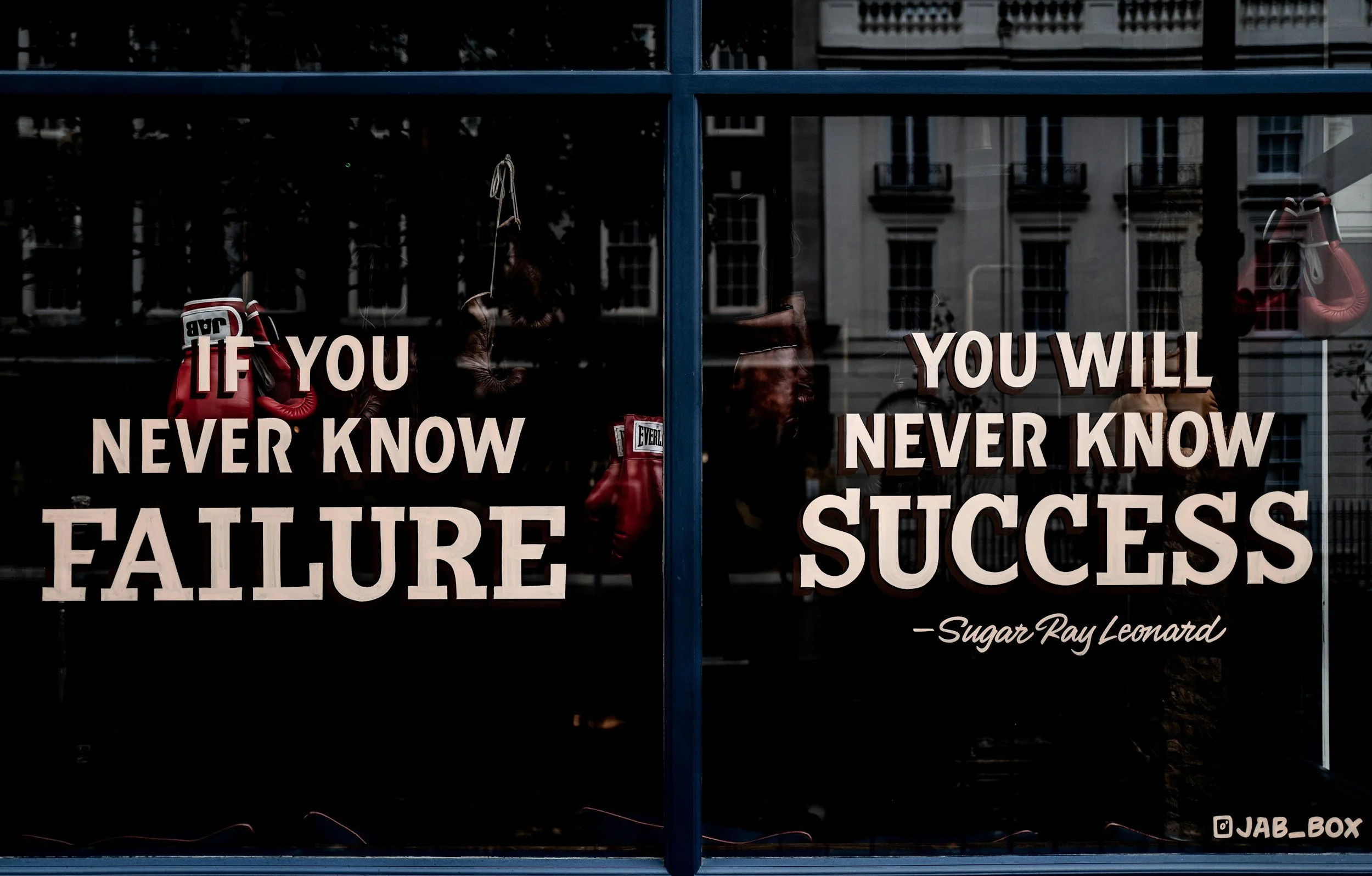
Fear of Failure: How to Stop It from Holding You Back
Fear of failure is one of the most common (and most limiting) mental blocks people face. It shows up quietly as overthinking, hesitation, perfectionism, or the urge to stay in your comfort zone. For athletes, professionals, creatives, and high achievers alike, fear of failure doesn’t mean you lack confidence or ability — it means you care.
The problem isn’t fear itself. The problem is letting fear make your decisions.
Let's break down what fear of failure really is, how it shows up, and practical ways to stop it from holding you back so you can perform, grow, and move forward with more confidence.

The 3 Mental Skills That Will Matter Most in 2026
Every new year brings a familiar question: What should I work on next?
But as we move into 2026, the answer isn’t about doing more, pushing harder, or finding the next productivity hack. The people who will thrive this year won’t necessarily be the most motivated or disciplined—they’ll be the ones with the strongest mental skills.
In a world that’s louder, faster, and more demanding than ever, mental performance isn’t a luxury. It’s a necessity.
Here are the 3 mental skills that will matter most in 2026, and why developing them may be the most valuable investment you make this year.

A "Game Day" Mindset: How to Show Up Ready
Whether you’re stepping onto a field, walking into an interview, presenting in a meeting, or preparing for a major performance, one thing remains true: showing up ready is more about your mindset than the moment itself.
A “game day mindset” isn’t reserved for athletes. It applies to anyone facing a high-pressure situation where preparation, confidence, and mental clarity matter. The challenge? Many people wait until right before the big moment to get their mind settled—and by then, stress, doubt, and nerves have already taken over.

Staying Centered During the Holiday Season
The holidays can be one of the most joyful—and disruptive—times of the year. Between travel, social events, family obligations, and changes in schedule, even the most disciplined routines can get thrown off track. Whether you’re an athlete in your off-season, a student wrapping up exams, or a professional balancing end-of-year projects, it’s easy to feel your structure slipping away.
But here’s the thing: staying focused during busy seasons isn’t about sticking to your routine perfectly. It’s about staying intentional, flexible, and grounded in what matters most to you.

The Power of Preparation: Why Your Mindset Starts Before the Big Moment
When most people think about performance, they picture the spotlight moment—the big game, the job interview, the presentation, or even the first day in a new role. But the truth is, success doesn’t start when you step onto the field, into the boardroom, or in front of an audience. It starts long before that, in the way you prepare your body, your schedule, and—most importantly—your mindset.

What to Do When Motivation Disappears
We’ve all experienced it—that feeling when the drive you once had just…vanishes. Maybe you started strong on a project, a fitness plan, or a personal goal, and now you’re struggling to find the energy to keep going. It’s frustrating, and it can even make you question whether you’re cut out for the task at all.
Here’s the truth: motivation isn’t supposed to last forever. It’s natural for it to come and go. What matters isn’t how motivated you feel in the moment—it’s what you do when motivation disappears.

What a Mental Performance Coach Actually Does
When people hear the term mental performance coach, they often picture a motivational speaker shouting from the sidelines or someone handing out quick fixes for stress. But the reality is much deeper—and far more impactful. As someone who works with young professionals and athletes, I see every day how strengthening the mental side of performance is not only powerful, but necessary.

Breaking Through Mental Blocks
We’ve all had those moments—when you're motivated, capable, and ready to take action but something feels like it’s in the way. You hesitate, second-guess yourself, or just can’t seem to get going. These moments are often the result of mental blocks: invisible barriers that stand between us and our full potential.
As a mental performance coach, I see these blocks not as signs of failure, but as opportunities for growth. Whether you're an athlete, a professional, or someone working toward personal goals, breaking through these mental blocks is often the key to unlocking your next level.

Building Resilience: Strategies for Handling Setbacks
Let’s be real: setbacks sting. Whether it's falling short of a goal, losing a competition, or simply making a mistake you know you're better than, failure has a way of shaking our confidence and making us question our progress.
So how do you build that kind of resilience? Here are some practical strategies to help you recover from failure and use it as fuel for growth.

Self-Talk: How to Rewire Your Inner Dialogue for Success
Whether you're stepping onto the field, walking into a high-stakes meeting, or chasing that next personal goal—one thing is always with you: your inner voice. And here’s the truth most people overlook: The way you talk to yourself can either be your greatest asset or your biggest barrier.
As a mental performance coach working with a lot of athletes and young professionals, I’ve seen firsthand how powerful self-talk can be. It can help you bounce back from failure, push through discomfort, and stay locked in when it matters most. But it can also hold you back, keep you small, and sabotage your confidence—if you don’t take control of it.

Time Management for Peak Performers
In my work with professionals and athletes, managing time effectively is a challenge I see come up time and time again. Whether you're juggling a demanding career, pursuing athletic excellence, or striving for personal growth, mastering time management is essential for reaching peak performance.
In a world filled with constant noise and distractions, staying focused can be tough. From emails and social media to endless to-do lists, it’s easy to feel overwhelmed. But time is your most valuable resource—how you use it will determine how far you go. The good news? With the right strategies and tools, you can manage your time more efficiently, stay focused, and achieve your goals faster.

Managing Performance Anxiety and Pre-Event Nerves
Whether you're stepping up to the plate in a big game, presenting an idea in a meeting, or giving a performance in front of an audience, those pre-event nerves can feel overwhelming. Performance anxiety is something many young professionals and athletes experience at some point. It’s the feeling that your body and mind may not be able to live up to expectations, whether your own or those of others. But, here’s the good news: You can manage this anxiety and turn it into an asset rather than a hindrance. Below are strategies to help you not only manage anxiety but also use it to boost your performance.

The Importance of Rest and Recovery in Mental Performance
In our hustle-driven society, mental performance is often equated with sustained effort and relentless drive. From tackling a demanding project at work to consistently performing at a high level in sports, we tend to prioritize doing over recovering. However, what many high achievers overlook is that mental performance isn't solely driven by working harder or longer—it’s just as much about how well we rest and recover.
While physical recovery is widely recognized for its role in enhancing athletic performance, the impact of rest on mental performance is often underestimated. In fact, proper mental recovery is not just a luxury; it’s a necessity for sustaining peak performance over time.